July 19, 2006@SCB Entertainment (formerly Downtime)
Now Casting Mythic Gods, Goddesses and Demons for the next MAJOR Group ArtShow for the ArtMaker Forum on THE MOTHERBOARDS!! Proposals should detail your personal interpretation of a classic deity, ruler, god or goddess archetype. If interested, please post your submission in the ArtMaker 2006 Group Show Planning Forum or reply via email to ArtMaker@Motherboardsnyc.com.
 1. Creation. The Doll-Maker Aruru – Demigod/dess of
Creation. Almighty Star. Ultimate Realty.
A genderless feminine hero/ine deity
who came before “the complete separation of the sexes” who’s abilities include
"mind-engendered progeny that could not multiply themselves” (dolls). A gentle
and skilled being, she fashioned the
form of things; specifically she molded her offspring from clay. Her clay
sculptures, called sig-en-sig-du came to life, thus creating humankind. S/he is
said to champion perfection, design, manufacture, and reconstruction. She
brought inspiration and joy to others, but bore pains of desolation and
resentment. After all, she was more astral than human and confined to the misery
of earth. Aruru means sacred knowledge (or the sacred utterance). He/she is a
pure concept, neuter, and often depicted in white flowing veils and dresses
(robes), and wearing necklaces. In the right hand is a water jar containing pure
water, and in the left, a willow branch. This deity is an inexhaustible
plentitude, a measureless reservoir, who is both full and empty and signifies
the ultimate creative principle which underlies the world. In Aruru, there is no
separation of primeval Matter and Spirit. S/he is signified by the Yantra, the
graphic, or symbol of creation. The overlapping triangles form the center of a
yantra, symbolizing the union of male and female, the central point, Bindu,
signifies the precursor cell. – Other names: Creatrix, Brahman, Brahma, Mammetum,
Ninmah, Nintu, Ninhursaga, Belet-ili, Nut, Mami, Gyan and Chandrama.
1. Creation. The Doll-Maker Aruru – Demigod/dess of
Creation. Almighty Star. Ultimate Realty.
A genderless feminine hero/ine deity
who came before “the complete separation of the sexes” who’s abilities include
"mind-engendered progeny that could not multiply themselves” (dolls). A gentle
and skilled being, she fashioned the
form of things; specifically she molded her offspring from clay. Her clay
sculptures, called sig-en-sig-du came to life, thus creating humankind. S/he is
said to champion perfection, design, manufacture, and reconstruction. She
brought inspiration and joy to others, but bore pains of desolation and
resentment. After all, she was more astral than human and confined to the misery
of earth. Aruru means sacred knowledge (or the sacred utterance). He/she is a
pure concept, neuter, and often depicted in white flowing veils and dresses
(robes), and wearing necklaces. In the right hand is a water jar containing pure
water, and in the left, a willow branch. This deity is an inexhaustible
plentitude, a measureless reservoir, who is both full and empty and signifies
the ultimate creative principle which underlies the world. In Aruru, there is no
separation of primeval Matter and Spirit. S/he is signified by the Yantra, the
graphic, or symbol of creation. The overlapping triangles form the center of a
yantra, symbolizing the union of male and female, the central point, Bindu,
signifies the precursor cell. – Other names: Creatrix, Brahman, Brahma, Mammetum,
Ninmah, Nintu, Ninhursaga, Belet-ili, Nut, Mami, Gyan and Chandrama.
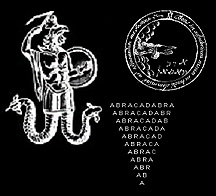 2. The Fable God. Dark
Star. Abraxas – Demon. Delusion. Mind Games. Fiction. False Idol. The Fable God.
Creator of the Unreal Reality. Often,
engraved on certain antique stones used as Amulets or charms. Abraxas was an
Archon (masculine ruler) with the head of a rooster, or Lion, with rays
extending the body of a man, and legs fashioned like snakes. In his right hand
he grasps a club, a whip or a flail, and in his left is a round or oval shield -
a form referred to as the Anguipede.
2. The Fable God. Dark
Star. Abraxas – Demon. Delusion. Mind Games. Fiction. False Idol. The Fable God.
Creator of the Unreal Reality. Often,
engraved on certain antique stones used as Amulets or charms. Abraxas was an
Archon (masculine ruler) with the head of a rooster, or Lion, with rays
extending the body of a man, and legs fashioned like snakes. In his right hand
he grasps a club, a whip or a flail, and in his left is a round or oval shield -
a form referred to as the Anguipede. Abraxas is a demon of divine emanations including ABRACADBRA. He is a deceiver and a destroyer, especially of those who seek to enter his realm who have not the power and skill to treat with him. He destroys witches by transferring the witch's Book of Shadows (place where etchings, spells are kept) to a parallel plane and then reads it backwards, undoing the witches magic. Eventually he obtains the witch's powers for himself. His venom is mortal peril. His triangle forms the Star of Spirit, the Hexagram, the symbolic of hiding forever the great secret, the hidden flame. – Other names: Aslan, Abrasax, Abracax Aquarius, Abrahadabra, Apophis, Nergal, Vritra and Anzu.
 3. The Ancient One of the Seas. Planetary
Consciousness. Thetis – Demon. Goddess of Rivers. The Primordial Goddess of the
Sweet Waters. Concerned with the
secure operation of the world's primeval systems and water, sacred love, faith and purity, Thetis possessed the
Tablets of Destiny. The
manifestation of consciousness was born when Thetis created humankind to help
the gods. For her, "Every man and woman is a star." Often depicted as mermaid or
riding a sea horse, Thetis is the origin of demonic as well as deified
personalities. In her primeval form, she is depicted as a huge, bloated female
dragon that personifies the saltwater ocean. In a rage, she gave birth to giant
sea serpents, storm demons, fish-men and scorpion-men to battle her enemies. She
presided over the all-important realm of aristocratic adolescence, young
nobility and attempted to immortalize one of her famous sons, who was human. She
anointed the infant's body with ambrosia and then placed it upon a fire in order
to burn away the mortal parts. When she was interrupted, she deserted in a rage.
In a later version, she dipped the child in the river holding him by the heel.
All his parts the river touched became invulnerable, but his heel remained dry.
Eventually, when her son was killed by an arrow that penetrated his heel, she
returned to the depths of the ocean, never to be seen again. She is the first an
only deity to subscribe to suicidal tendency.Her name is usually written with
the sign engur, is thought to be a womb as well as a sweet fertile water pot. –
Other names: Cetus, Tiamat, Tethys, Apsu, Metis, Mitéramou, Nammu Yemoja, Ceto,
Keto, Nereid, and Danu. (Proposal in: Gigi
Deluxe - Visual).
3. The Ancient One of the Seas. Planetary
Consciousness. Thetis – Demon. Goddess of Rivers. The Primordial Goddess of the
Sweet Waters. Concerned with the
secure operation of the world's primeval systems and water, sacred love, faith and purity, Thetis possessed the
Tablets of Destiny. The
manifestation of consciousness was born when Thetis created humankind to help
the gods. For her, "Every man and woman is a star." Often depicted as mermaid or
riding a sea horse, Thetis is the origin of demonic as well as deified
personalities. In her primeval form, she is depicted as a huge, bloated female
dragon that personifies the saltwater ocean. In a rage, she gave birth to giant
sea serpents, storm demons, fish-men and scorpion-men to battle her enemies. She
presided over the all-important realm of aristocratic adolescence, young
nobility and attempted to immortalize one of her famous sons, who was human. She
anointed the infant's body with ambrosia and then placed it upon a fire in order
to burn away the mortal parts. When she was interrupted, she deserted in a rage.
In a later version, she dipped the child in the river holding him by the heel.
All his parts the river touched became invulnerable, but his heel remained dry.
Eventually, when her son was killed by an arrow that penetrated his heel, she
returned to the depths of the ocean, never to be seen again. She is the first an
only deity to subscribe to suicidal tendency.Her name is usually written with
the sign engur, is thought to be a womb as well as a sweet fertile water pot. –
Other names: Cetus, Tiamat, Tethys, Apsu, Metis, Mitéramou, Nammu Yemoja, Ceto,
Keto, Nereid, and Danu. (Proposal in: Gigi
Deluxe - Visual).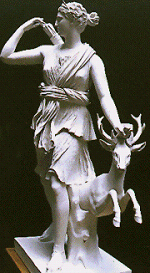 4. Virgin. Huntress. Mind
Impression. Athena – Demigod. Father’s Daughter. Virgin Queen. Goddess of
Victory. An Animalistic Spirit. Guardian of the Fertile Green. Patroness of Wild
Animals. Athena, sprung forth a
fearless warrior fully grown, armored and screeching a battle cry from the head
of her father. A supreme strategist in military matters, she was a guardian who
either destroyed whole cities or brought them to victory if they had her favor.
Athena was also an accomplished mediator and judge, who interpreted and upheld
the laws of her father, to who she was she was subordinate to. Protector of
community and communal resources, she embodies our primal need to connect with
the natural world. Confident, strong, and associated with remote places,
especially meadows, forests and mountains, she undertook many adventures,
inflicted great cruelty and pain, and remained a virgin with extraordinary
oracular and healing powers. A wise goddess, to whom other gods came if they
could not resolve their own disputes, Athena viewed “power” as something to be
shared. A champion of urbanity and metropolis she took care of orphans and
widows, sought justice for the poor and blessed the weapons of hunters. Athena
loved to play war games with her fellow deities. The standard depiction of the
“maiden” goddess shows her carrying a bow and arrows, or as a woman wearing a
scepter, or ankh, baring her emblem – either a red crown or a shield crossed
with two arrows the color red, color of the Blood of Life – which represents
various aspects of “life power.” – Other names: Pallas, Niobe, Napaeae, Ganesha,
Artemis, Diana, Neit, Alanta, Athene, Atalante, Nana, Bukúu, Ninsun, Ninsar and
Yoruba and Nike.
4. Virgin. Huntress. Mind
Impression. Athena – Demigod. Father’s Daughter. Virgin Queen. Goddess of
Victory. An Animalistic Spirit. Guardian of the Fertile Green. Patroness of Wild
Animals. Athena, sprung forth a
fearless warrior fully grown, armored and screeching a battle cry from the head
of her father. A supreme strategist in military matters, she was a guardian who
either destroyed whole cities or brought them to victory if they had her favor.
Athena was also an accomplished mediator and judge, who interpreted and upheld
the laws of her father, to who she was she was subordinate to. Protector of
community and communal resources, she embodies our primal need to connect with
the natural world. Confident, strong, and associated with remote places,
especially meadows, forests and mountains, she undertook many adventures,
inflicted great cruelty and pain, and remained a virgin with extraordinary
oracular and healing powers. A wise goddess, to whom other gods came if they
could not resolve their own disputes, Athena viewed “power” as something to be
shared. A champion of urbanity and metropolis she took care of orphans and
widows, sought justice for the poor and blessed the weapons of hunters. Athena
loved to play war games with her fellow deities. The standard depiction of the
“maiden” goddess shows her carrying a bow and arrows, or as a woman wearing a
scepter, or ankh, baring her emblem – either a red crown or a shield crossed
with two arrows the color red, color of the Blood of Life – which represents
various aspects of “life power.” – Other names: Pallas, Niobe, Napaeae, Ganesha,
Artemis, Diana, Neit, Alanta, Athene, Atalante, Nana, Bukúu, Ninsun, Ninsar and
Yoruba and Nike.  5. Creative Fire. Lord of the Forge. Light
in Extension. Bright Planet. Hephaestus – Demigod. Fire of Desire. Lord of Light
and Reason. Volcanoes. Hermit. Sun God. Heart of Matter. Divine Builder.
Charioteer of Prosperity. The
personification of all that burns: sun, heat, terrestrial fire, energy, stomach
and passion Hephaestus lights the way, his brightness enables him to see misdeed
and the future. Beauty and the Beast. Deformed and lame, Hephaestus spent nine
years dwelling alone in a cave mastering metallurgy. A blacksmith, craftsman,
and sculptor, he carries the homajakalika, the uncertain fire device or Stele of
Revealing, a ladle; and the Sothis, winged globe or solar disk. A gifted artisan
who created ritual objects and durable tools of utility and beauty. Protector of
metals, his technology made the strongest, most deadly weapons that are in
themselves, neither good nor bad. He is the altruistic symbol, a reminder of the
double-edged nature of technology can create as well as destroy. Goldsmith,
Technique and Craftsman god, or God of Smiths, Hephaestus chews copper and
creates cultural renovation. He is LVX, the carpenter, God of Divination, he is
the nourisher. God of bricks, Hephaestus is the god who lays foundations and
builds houses. – Other names: Hephaistos, Apollo, Mercury, Ksathra, Agni, Nusku,
Ishum, Gushkin-banda, Tvastar, Tvashtri, Vulcan, Aditya, Ninildu, Mummu, Lahar,
Phoebos, Pusan, Tammuz, Adoni, Geb, Edfu, Had, Helios, Sun, Ra-Herakhty, Amun-Ra,
Aten, Marduk, and Kabta.
5. Creative Fire. Lord of the Forge. Light
in Extension. Bright Planet. Hephaestus – Demigod. Fire of Desire. Lord of Light
and Reason. Volcanoes. Hermit. Sun God. Heart of Matter. Divine Builder.
Charioteer of Prosperity. The
personification of all that burns: sun, heat, terrestrial fire, energy, stomach
and passion Hephaestus lights the way, his brightness enables him to see misdeed
and the future. Beauty and the Beast. Deformed and lame, Hephaestus spent nine
years dwelling alone in a cave mastering metallurgy. A blacksmith, craftsman,
and sculptor, he carries the homajakalika, the uncertain fire device or Stele of
Revealing, a ladle; and the Sothis, winged globe or solar disk. A gifted artisan
who created ritual objects and durable tools of utility and beauty. Protector of
metals, his technology made the strongest, most deadly weapons that are in
themselves, neither good nor bad. He is the altruistic symbol, a reminder of the
double-edged nature of technology can create as well as destroy. Goldsmith,
Technique and Craftsman god, or God of Smiths, Hephaestus chews copper and
creates cultural renovation. He is LVX, the carpenter, God of Divination, he is
the nourisher. God of bricks, Hephaestus is the god who lays foundations and
builds houses. – Other names: Hephaistos, Apollo, Mercury, Ksathra, Agni, Nusku,
Ishum, Gushkin-banda, Tvastar, Tvashtri, Vulcan, Aditya, Ninildu, Mummu, Lahar,
Phoebos, Pusan, Tammuz, Adoni, Geb, Edfu, Had, Helios, Sun, Ra-Herakhty, Amun-Ra,
Aten, Marduk, and Kabta.  6. Snake goddess. Silent Passage. The Chasm.
Death. Rebirth. Chaos – Demon. High Priestess. Sustainer. Destroyer.
Regeneration. Protector and Lover of the Dead. She who Erases. Nurse of
Crocodiles. Queen of the Underworld.
She is the central symbol in the mysterious cycle of life, death and
regeneration. She is the original void, or “yawning”, from which the primordial
emerged. Not only did she have the power of life and death, but also, by
shedding her skin, she was reborn, transcending death itself. Immortal, her
spirit is indomitable. Chaos was cast as the whirlpool, or water spout, she had
to be conquered, her powers controlled, in order for any being to establish a
new order. Full of rage, goddess of wrath, a grim material figure, she steals
and eats children. Her acts were global in scope. Depicted as a woman with a
snake, snake-headed, or as a multi-headed water serpent with poisonous blood;
she is a supernatural monster. Every time a head is chopped off, another grows
in its place. Her long curly black locks or hair, often transformed into a
writhing tangle of threatening, hissing serpents, dared beings to look at her
penetrating, deadly, fate-filled stare and be turned to stone. Underworld (or
mortuary) goddess, she and devoured the dead if their hearts were found weighed
down with guilt, sin, ignorance and decay. The deceased received her divine
power by means of the mummy's wrappings. She wove the linen bandages and shrouds
to protect the dead from decomposition. She watched over the sarcophagus, looked
after the jackal-headed Duamutef who guarded the stomach of the dead. She used
her arrows to put evil spirits to sleep. Goddess of gloom, she took the scarab
from the solar barque, the dead were pictured lying in her starry bosom. Other
names – Heraion, Hydra, Charybdis, Typhon, Typheus, Medusa, Aegis, Kali, Ammut,
Ereshkigal, Lamashtu, Namtar, Hariti, Erinys, Kal, The Chasm, and Hemera.
6. Snake goddess. Silent Passage. The Chasm.
Death. Rebirth. Chaos – Demon. High Priestess. Sustainer. Destroyer.
Regeneration. Protector and Lover of the Dead. She who Erases. Nurse of
Crocodiles. Queen of the Underworld.
She is the central symbol in the mysterious cycle of life, death and
regeneration. She is the original void, or “yawning”, from which the primordial
emerged. Not only did she have the power of life and death, but also, by
shedding her skin, she was reborn, transcending death itself. Immortal, her
spirit is indomitable. Chaos was cast as the whirlpool, or water spout, she had
to be conquered, her powers controlled, in order for any being to establish a
new order. Full of rage, goddess of wrath, a grim material figure, she steals
and eats children. Her acts were global in scope. Depicted as a woman with a
snake, snake-headed, or as a multi-headed water serpent with poisonous blood;
she is a supernatural monster. Every time a head is chopped off, another grows
in its place. Her long curly black locks or hair, often transformed into a
writhing tangle of threatening, hissing serpents, dared beings to look at her
penetrating, deadly, fate-filled stare and be turned to stone. Underworld (or
mortuary) goddess, she and devoured the dead if their hearts were found weighed
down with guilt, sin, ignorance and decay. The deceased received her divine
power by means of the mummy's wrappings. She wove the linen bandages and shrouds
to protect the dead from decomposition. She watched over the sarcophagus, looked
after the jackal-headed Duamutef who guarded the stomach of the dead. She used
her arrows to put evil spirits to sleep. Goddess of gloom, she took the scarab
from the solar barque, the dead were pictured lying in her starry bosom. Other
names – Heraion, Hydra, Charybdis, Typhon, Typheus, Medusa, Aegis, Kali, Ammut,
Ereshkigal, Lamashtu, Namtar, Hariti, Erinys, Kal, The Chasm, and Hemera.  7. The Horse Demon. Divine Comedy. Primitive
Formations. Chiron – Demon. The Great Horse. Good-looking in appearance and generally having gentle and
personable manners, Chiron is skilled in the work of healing and miracles. A
fierce warrior, with the head and torso of a human and the body and legs of a
horse, his attributes were the arrow, bow, staff, sword and caduceus, a
snake-bearing wand. Chiron was the Physician of the celestial gods, best known
for his supremely rational mind and clarity of vision. Quite humorous and
intelligent, he preferred dense forests and mangroves and could convey to man, a
code of honor and trust if he chose. He tended to be a bit of a loaner and a
cynic with a dark sense of humor. He had, for lack of a better way of saying, a
bit of a joke with his ass and often played pranks. Constantly flicking his
head, this demon had a mind of his own; and was one massive wall of muscle,
possessing the lithe movement of a jungle cat, the endurance of a horse. Chiron
is a fusion of forest faerie and demon union, deemed a mistiso (half-breeds). He
was quick to temper, going from impish humor, to throwing punches, to playing
hide and seek within the blink of an eye. Sometimes depicted as red, three-eyed
and with a horse head trampling deities underfoot or lying in ambush awaiting
nighttime travelers, precedes modern adaptations of this being, which appear in
folklore and fairy tales. He is fond of sweets and in primitive form consumes
both human and divine flesh. Other Names – Indramon, Indaramon, Ashwini, Ashvini,
Kumaras, Tikbalang, Hayagriva, Mahayana, Centaur and Paramasva.
7. The Horse Demon. Divine Comedy. Primitive
Formations. Chiron – Demon. The Great Horse. Good-looking in appearance and generally having gentle and
personable manners, Chiron is skilled in the work of healing and miracles. A
fierce warrior, with the head and torso of a human and the body and legs of a
horse, his attributes were the arrow, bow, staff, sword and caduceus, a
snake-bearing wand. Chiron was the Physician of the celestial gods, best known
for his supremely rational mind and clarity of vision. Quite humorous and
intelligent, he preferred dense forests and mangroves and could convey to man, a
code of honor and trust if he chose. He tended to be a bit of a loaner and a
cynic with a dark sense of humor. He had, for lack of a better way of saying, a
bit of a joke with his ass and often played pranks. Constantly flicking his
head, this demon had a mind of his own; and was one massive wall of muscle,
possessing the lithe movement of a jungle cat, the endurance of a horse. Chiron
is a fusion of forest faerie and demon union, deemed a mistiso (half-breeds). He
was quick to temper, going from impish humor, to throwing punches, to playing
hide and seek within the blink of an eye. Sometimes depicted as red, three-eyed
and with a horse head trampling deities underfoot or lying in ambush awaiting
nighttime travelers, precedes modern adaptations of this being, which appear in
folklore and fairy tales. He is fond of sweets and in primitive form consumes
both human and divine flesh. Other Names – Indramon, Indaramon, Ashwini, Ashvini,
Kumaras, Tikbalang, Hayagriva, Mahayana, Centaur and Paramasva. 
 8. Grain Goddess. Partnership Continuum.
Landed. Far Dunes. Durga – Demigod. Supreme Goddess. Strength. Earth Mother.
Son-Lover. Sacred Marriage. Fruitful Soil. Spirit of Fertility, Vegetation,
Grain and Ancient Harvest. The Barmaid. Place of Origin. Durga is the goddess
of persisting, or “budding,” often portrayed as a giant naked lady with her back
arched over the earth. She is sometimes seen with a sickle or shaft,
representing the cyclical nature of the seasons and the art of agriculture she
teaches. Occasionally, she is a great, beautiful cow whose belly is covered with
suckling offspring cubs or a midwife with bare bosoms who carries a baby in her
left arm. When dressed, she wears a horned headdress, a tiered skirt and carries
a mace or baton adorned with an omega motif or a derivation. Self-Regulating.
Self-Perpetuating. New Earth. Planetary Changes. Durga is the harmonic of
ever-expanding awareness and inter-dimensional events that affect the earth and
those who live on it. Renaissance and enlightenment are attributes of her
dynamic laws governing earth cosmology and are manifests of her
Partnership-Oriented universe. Son-Lover, Durga gave birth to a son, the
almighty ruling diety. He eventually grew into manhood and became her lover.
Their union evolved into the Sacred Marriage. Protectress of Home and Hearth.
Goddess of Brewing and Alcohol. Highly revered for fertility, she is the "true
and great lady of heaven." bringer of bountiful harvests, her presence purifies.
She enjoys closer links with fecundity and a child's well-being at birth. Her
name, "lady of silence," is derived from the concept that the child in the womb
is susceptible to both good and bad influences. When vain, hungry or
grief-stricken, she causes the abundant fields to become barren and cold. Winter
envelops all of the Earth. The seeds of a pomegranate or the poppy were known to
be sacred to her. When ingested by the Grain Goddess, crops would again grow.
Other names – Gaia, Ashnan, Ge, Pangaia, Parthená, Parthenos, Demeter, Eleusís,
Ceres, Inhursaga, Aya, Misharu, Hestia, Hera, Eileithyia, Siduri, and Hebe.
8. Grain Goddess. Partnership Continuum.
Landed. Far Dunes. Durga – Demigod. Supreme Goddess. Strength. Earth Mother.
Son-Lover. Sacred Marriage. Fruitful Soil. Spirit of Fertility, Vegetation,
Grain and Ancient Harvest. The Barmaid. Place of Origin. Durga is the goddess
of persisting, or “budding,” often portrayed as a giant naked lady with her back
arched over the earth. She is sometimes seen with a sickle or shaft,
representing the cyclical nature of the seasons and the art of agriculture she
teaches. Occasionally, she is a great, beautiful cow whose belly is covered with
suckling offspring cubs or a midwife with bare bosoms who carries a baby in her
left arm. When dressed, she wears a horned headdress, a tiered skirt and carries
a mace or baton adorned with an omega motif or a derivation. Self-Regulating.
Self-Perpetuating. New Earth. Planetary Changes. Durga is the harmonic of
ever-expanding awareness and inter-dimensional events that affect the earth and
those who live on it. Renaissance and enlightenment are attributes of her
dynamic laws governing earth cosmology and are manifests of her
Partnership-Oriented universe. Son-Lover, Durga gave birth to a son, the
almighty ruling diety. He eventually grew into manhood and became her lover.
Their union evolved into the Sacred Marriage. Protectress of Home and Hearth.
Goddess of Brewing and Alcohol. Highly revered for fertility, she is the "true
and great lady of heaven." bringer of bountiful harvests, her presence purifies.
She enjoys closer links with fecundity and a child's well-being at birth. Her
name, "lady of silence," is derived from the concept that the child in the womb
is susceptible to both good and bad influences. When vain, hungry or
grief-stricken, she causes the abundant fields to become barren and cold. Winter
envelops all of the Earth. The seeds of a pomegranate or the poppy were known to
be sacred to her. When ingested by the Grain Goddess, crops would again grow.
Other names – Gaia, Ashnan, Ge, Pangaia, Parthená, Parthenos, Demeter, Eleusís,
Ceres, Inhursaga, Aya, Misharu, Hestia, Hera, Eileithyia, Siduri, and Hebe. 9
9 . Mistress of the Labyrinth. Codified Text.
Lady of the Diadem. Investiture Ritual. Labrys – Goddess of Writing. Lady of
Books. Patron Deity of the Edubba (archives and asylum).
Goddess of
Letters, Marks and Measurement, Labrys was the celestial librarian, the
patroness of arithmetic, architecture and records and tablet-scribe of the gods.
The symbol of the labrys, the inscribing stylus, appears in many cultures
throughout prehistory. Represented as a double triangle or in an hourglass
configuration (which when tipped on its side bears a close resemblance to
infinity). The labrys has often been referred to as a “double axe,” although
there is no evidence that it was used as a real weapon. The Labrys was
ceremonial apparatus, a central part of many rituals, including the golden
crowning of the king. The ancient primitives carved symbols on walls of stone
corridors creating remarkable structures, known as the Labyrinths – the dwelling
of Labrys. In rooms where sacred rituals took place, Archeologists have
recovered hundreds of small bronze labryses which bear her image including
exquisite gold jewelry and tiny sealstones. Decorative in nature, the symmetry
of the labrys represents yin-yang. A labyrinth was built for rites and
processions. It was not an underground maze and did not contain false choices
and dead ends designed to trick and confound. Instead, it consisted of one long,
circuitous path to the center. Labrys used the labyrinth for walking meditation,
a metaphor for the journey to the center of one’s spiritual and emotional self.
With each step along the path, the burdens of life are released so that by the
time you reach the center, you are less encumbered and able to connect with your
inner self. Because of its womb-like shape, the labyrinth has been connected
with a mystery rite. Many scholars believe that the labyrinth was originally a
dance pattern, and is found in every age in art, literature and architecture, as
well as in non three-dimensional forms. Other names – Nabu, Seshat, Belit-tseri,
Nidaba, Nanshe, Kern, Hopis, Hippolyte and Ariadne. (Proposals in: Mia
Theodoratus - Performance; Tonya Knudsen - Visual).
. Mistress of the Labyrinth. Codified Text.
Lady of the Diadem. Investiture Ritual. Labrys – Goddess of Writing. Lady of
Books. Patron Deity of the Edubba (archives and asylum).
Goddess of
Letters, Marks and Measurement, Labrys was the celestial librarian, the
patroness of arithmetic, architecture and records and tablet-scribe of the gods.
The symbol of the labrys, the inscribing stylus, appears in many cultures
throughout prehistory. Represented as a double triangle or in an hourglass
configuration (which when tipped on its side bears a close resemblance to
infinity). The labrys has often been referred to as a “double axe,” although
there is no evidence that it was used as a real weapon. The Labrys was
ceremonial apparatus, a central part of many rituals, including the golden
crowning of the king. The ancient primitives carved symbols on walls of stone
corridors creating remarkable structures, known as the Labyrinths – the dwelling
of Labrys. In rooms where sacred rituals took place, Archeologists have
recovered hundreds of small bronze labryses which bear her image including
exquisite gold jewelry and tiny sealstones. Decorative in nature, the symmetry
of the labrys represents yin-yang. A labyrinth was built for rites and
processions. It was not an underground maze and did not contain false choices
and dead ends designed to trick and confound. Instead, it consisted of one long,
circuitous path to the center. Labrys used the labyrinth for walking meditation,
a metaphor for the journey to the center of one’s spiritual and emotional self.
With each step along the path, the burdens of life are released so that by the
time you reach the center, you are less encumbered and able to connect with your
inner self. Because of its womb-like shape, the labyrinth has been connected
with a mystery rite. Many scholars believe that the labyrinth was originally a
dance pattern, and is found in every age in art, literature and architecture, as
well as in non three-dimensional forms. Other names – Nabu, Seshat, Belit-tseri,
Nidaba, Nanshe, Kern, Hopis, Hippolyte and Ariadne. (Proposals in: Mia
Theodoratus - Performance; Tonya Knudsen - Visual). 10. Moon Goddess. Light Ship. Bringer of the
Dawn. Hierarchy of Light. Aurora - Path Maker. Politician. Perception.
Explosive. Intellectual Brilliancy. Essence. Patron of Witches. Jewel Meteor.
Goddess of Initiation and Ceremony. Exhilaration. Intoxication. The Mirror.
Mistress of the Sky.
10. Moon Goddess. Light Ship. Bringer of the
Dawn. Hierarchy of Light. Aurora - Path Maker. Politician. Perception.
Explosive. Intellectual Brilliancy. Essence. Patron of Witches. Jewel Meteor.
Goddess of Initiation and Ceremony. Exhilaration. Intoxication. The Mirror.
Mistress of the Sky.  She is equated with the
eternal night and the symbolic negative space created by contours. She is muse
of the crescent moon casting her beams far and wide. Goddess of light, fortune,
and luck, her rapture is electricity. She created the moon state and the
energizing divine nectar, Soma, which offered intoxicating qualities. The liquid
essence of vision, t his was the food of the universe, the drink that leads to
immortality. She was bright-eyed (sometimes known as grey- or pale-eyed) and
brilliant, frequently depicted as the white-armed Goddess, naked with bare
breasts and vaginal area prominent. She is guardian of pathways traveled at
night in her two-horsed silver chariot. Saffron-robed, she carries torches. She
is she is invoked as the tower of wealth and favor. Personification of truth,
Aurora is the ascendant, the point in the eastern horizon representing the self
and is equated to the dawn. As goddess of the recurring dawn, the blood she shed
in giving birth to the sun was said to color the sky pink at dawn. Guardian of
prosperity, able to clear away obstacles and solve problems. Other Names – Ni,
Sukshma Aditi, Ninisinna, Svitri, Dawn, Nyx, Aa, Hekate, Delos, Eos, Anat,
Lakshmi, Lagna, Pratyusha, Selene, Ratnolka, Diksa, Buddhi, Phoebe, Sia, Khepri
and Mada.
She is equated with the
eternal night and the symbolic negative space created by contours. She is muse
of the crescent moon casting her beams far and wide. Goddess of light, fortune,
and luck, her rapture is electricity. She created the moon state and the
energizing divine nectar, Soma, which offered intoxicating qualities. The liquid
essence of vision, t his was the food of the universe, the drink that leads to
immortality. She was bright-eyed (sometimes known as grey- or pale-eyed) and
brilliant, frequently depicted as the white-armed Goddess, naked with bare
breasts and vaginal area prominent. She is guardian of pathways traveled at
night in her two-horsed silver chariot. Saffron-robed, she carries torches. She
is she is invoked as the tower of wealth and favor. Personification of truth,
Aurora is the ascendant, the point in the eastern horizon representing the self
and is equated to the dawn. As goddess of the recurring dawn, the blood she shed
in giving birth to the sun was said to color the sky pink at dawn. Guardian of
prosperity, able to clear away obstacles and solve problems. Other Names – Ni,
Sukshma Aditi, Ninisinna, Svitri, Dawn, Nyx, Aa, Hekate, Delos, Eos, Anat,
Lakshmi, Lagna, Pratyusha, Selene, Ratnolka, Diksa, Buddhi, Phoebe, Sia, Khepri
and Mada.  11. The Horned Demon. Vegetation God. Guard
the Cedar Forest. Dionysus – Demon. Nature Spirit of Grape and Wine. The Bull.
God of Ecstasy and Fertility. The Monkey King of Poetry.
Dionysus brought prosperity and happiness to
those who offered him appropriate worship, but to those who did not, he brought
madness and death. Attended by Maenads and Satyrs, who were a passionate and
lively bunch, he relished in carnal delight. His festivals were renowned for the
pleasure. Celebratory by nature, Dionysus emphasized the joy of life; successful
enterprises; pagan and arcane ritual celebrations, prosperity and captured
spoil. He aided only those who first demonstrated that they were worthy and
those who performed in his name and adopted his ways. He traveled across the sky
in his gufa, with the stars and planets about him. As deity of the wine and oil,
attributed with both benign and malevolent roles, he was reputed to have
squeezed human heads like grapes when angered or disappointed, but provided
aromatic oils and ointments through this process. To some he was part human and
part goat, horse, bull, or ram. He carried an ivory covered staff called the
thyrsos and wore a crown of serpents. When associated with the ram, a symbol of
virility, he was depicted as ram-headed, specifically a woolly ram with curved
horns. Most important, Dionysus was never born in the usual manner. In some
cultures he is dismembered by great arcane demons, but then reconstituted by
magic. In other myths, he was snatched as a premature infant from his mother who
was incinerated by divine lightning, then replanted in the thigh of goat, bull
or ram to await “birth.” God of chemical substances and altered states, the
regions of the hippocampus in the brain are called the cornu ammonis, literally
"Amun's Horns", due to the horned appearance of the bands of cellular layers.
Dionysus was patron of ammonia and ammonite. Ammonia, as well as being the
chemical, is a genus name in the foraminifera. Both these foraminiferans
(shelled Protozoa) and ammonites (extinct shelled cephalopods) have/had spiral
shells resembling a ram's, and Ammon's, horns. Other names – Satyr, Bacchus,
Ninagal, Kamutef, Horus, Ashgirbabbar, Humbaba, Sezmu, Sugriva, Amun, Min, Amun-Min,
Ennead, Ammon, Nanna, Sin, Suen, Ouranos and Uranus.
11. The Horned Demon. Vegetation God. Guard
the Cedar Forest. Dionysus – Demon. Nature Spirit of Grape and Wine. The Bull.
God of Ecstasy and Fertility. The Monkey King of Poetry.
Dionysus brought prosperity and happiness to
those who offered him appropriate worship, but to those who did not, he brought
madness and death. Attended by Maenads and Satyrs, who were a passionate and
lively bunch, he relished in carnal delight. His festivals were renowned for the
pleasure. Celebratory by nature, Dionysus emphasized the joy of life; successful
enterprises; pagan and arcane ritual celebrations, prosperity and captured
spoil. He aided only those who first demonstrated that they were worthy and
those who performed in his name and adopted his ways. He traveled across the sky
in his gufa, with the stars and planets about him. As deity of the wine and oil,
attributed with both benign and malevolent roles, he was reputed to have
squeezed human heads like grapes when angered or disappointed, but provided
aromatic oils and ointments through this process. To some he was part human and
part goat, horse, bull, or ram. He carried an ivory covered staff called the
thyrsos and wore a crown of serpents. When associated with the ram, a symbol of
virility, he was depicted as ram-headed, specifically a woolly ram with curved
horns. Most important, Dionysus was never born in the usual manner. In some
cultures he is dismembered by great arcane demons, but then reconstituted by
magic. In other myths, he was snatched as a premature infant from his mother who
was incinerated by divine lightning, then replanted in the thigh of goat, bull
or ram to await “birth.” God of chemical substances and altered states, the
regions of the hippocampus in the brain are called the cornu ammonis, literally
"Amun's Horns", due to the horned appearance of the bands of cellular layers.
Dionysus was patron of ammonia and ammonite. Ammonia, as well as being the
chemical, is a genus name in the foraminifera. Both these foraminiferans
(shelled Protozoa) and ammonites (extinct shelled cephalopods) have/had spiral
shells resembling a ram's, and Ammon's, horns. Other names – Satyr, Bacchus,
Ninagal, Kamutef, Horus, Ashgirbabbar, Humbaba, Sezmu, Sugriva, Amun, Min, Amun-Min,
Ennead, Ammon, Nanna, Sin, Suen, Ouranos and Uranus.  12. Hope. Plague. Bear Goddess. Portal
Oracle. Giver of All. Deification of Literature. Pandora – Demon. Butterfly. The
Deified the Concept of Punishment. Blessed. Misfortune. Goddess of Spinning and
Spoken Word. Name Chantress. Sacred text.
12. Hope. Plague. Bear Goddess. Portal
Oracle. Giver of All. Deification of Literature. Pandora – Demon. Butterfly. The
Deified the Concept of Punishment. Blessed. Misfortune. Goddess of Spinning and
Spoken Word. Name Chantress. Sacred text.  Pandora is the personification of speech and oral
communication and, is believed, to be able to lead a man to become a god. She is
also responsible for letting unspeakable evils loose upon the world, when she
opens her infamous jar (or box). The Goddess of Hope, she remains trapped in the
box while all of the “evils” escaped into the mortal realm, eventually she
escapes from her prison and is free to spread her good will. A manufactured
woman, Pandora was created in retaliation for the theft of fire from the
immortal realm. Despite being scapegoated for all of the woes of humanity, her
name means, “all-gifted,” which refers to the gifts (or charms) bestowed onto
her. She is the rare “tragic contrast” to the esteem in which women deities were
generally held, she became identified increasingly with shadow. Goddess of
misfortune, she is malevolent. An all-encompassing entity, with many aspects,
she was Butterfly Goddess and taught spiritual transformation. She was nymph who
could only repeat the last word someone else said to her sending devotees into a
frenzy, creating panic and pandemonium. As shadow, she is goddess of dark
reflection, direction and movement. Linked with The Fates, she has the spindle,
goddess of spinning and weaving. Her symbol was the weaver's shuttle. Gifts of
the olive tree and the flute are attributed to her benevolence. Other names -
Psyche, Panayía Arkoudiótissa, Eve, Hope, Vac, Minoa, Lusaaset, Dhanistha, Echo,
Chaya, Pandemos, Klotho, Namasangiti, Uttu, Omphale and Gati.
Pandora is the personification of speech and oral
communication and, is believed, to be able to lead a man to become a god. She is
also responsible for letting unspeakable evils loose upon the world, when she
opens her infamous jar (or box). The Goddess of Hope, she remains trapped in the
box while all of the “evils” escaped into the mortal realm, eventually she
escapes from her prison and is free to spread her good will. A manufactured
woman, Pandora was created in retaliation for the theft of fire from the
immortal realm. Despite being scapegoated for all of the woes of humanity, her
name means, “all-gifted,” which refers to the gifts (or charms) bestowed onto
her. She is the rare “tragic contrast” to the esteem in which women deities were
generally held, she became identified increasingly with shadow. Goddess of
misfortune, she is malevolent. An all-encompassing entity, with many aspects,
she was Butterfly Goddess and taught spiritual transformation. She was nymph who
could only repeat the last word someone else said to her sending devotees into a
frenzy, creating panic and pandemonium. As shadow, she is goddess of dark
reflection, direction and movement. Linked with The Fates, she has the spindle,
goddess of spinning and weaving. Her symbol was the weaver's shuttle. Gifts of
the olive tree and the flute are attributed to her benevolence. Other names -
Psyche, Panayía Arkoudiótissa, Eve, Hope, Vac, Minoa, Lusaaset, Dhanistha, Echo,
Chaya, Pandemos, Klotho, Namasangiti, Uttu, Omphale and Gati.  13. The Red Planet. War. Violent. Cultivated
Dominator. Ares – Demon. God of Hunting and Warfare. Most Hateful. Ultimate
Warrior. Invader. Destroyer. Conquerer. The Earthshaker. Plague God. Greed. God
of Raids, Riots and Scorched Earth.
God of enormous strength and cruelty, Ares
had numerous lovers and a long-standing pattern of the linking of sex and
violence. His way was co-optation, the tactic of neutralizing or winning by
assimilation. Ares was the personification of those undesirable traits and
derived from what some have called the “reptilian brain,” the part of the human
brain where ruthlessness, viciousness, and cunning developed long ago on the
evolutionary continuum. Associated with the realm of science, Ares was
particularly employed in the pursuit of furthering institutionalized warfare, he
employed the Mask of Agamemnon. Far from perfect, he had a dramatic and highly
mercurial personality, expressing many human emotions. He angered easily,
occasionally slipping into violent rage, and lusted after Goddesses and mortal
women alike. Solidifying the connection between sex and violence. A violent,
hard-drinking barbarian and chief, like most authoritarian rulers, he protected
his realm with the threat and/or use of violent force. As courage, he was the
National God, regulating the whole government of the country, choosing the king,
and directing military expeditions. Ares was born directly from Chaos, and the
embodiment of splendor. Depicted as wielding a sword or club, he is often
depicted shooting an arrow with his upper body enclosed by a winged disk. Head
of the army of gods, depicted as young and caste, he is seen as "one who jumps"
when fighting, virile and youthful, to some, his name may signify the emission
of seamen. Other names – Mars, Bhima, Eros, Indra, Arkamane, Sebitt, Erra,
Pleadies, Irra, Mamaki, Ashur, Sakra, Gerra, Amane, Menthu and Skanda.
13. The Red Planet. War. Violent. Cultivated
Dominator. Ares – Demon. God of Hunting and Warfare. Most Hateful. Ultimate
Warrior. Invader. Destroyer. Conquerer. The Earthshaker. Plague God. Greed. God
of Raids, Riots and Scorched Earth.
God of enormous strength and cruelty, Ares
had numerous lovers and a long-standing pattern of the linking of sex and
violence. His way was co-optation, the tactic of neutralizing or winning by
assimilation. Ares was the personification of those undesirable traits and
derived from what some have called the “reptilian brain,” the part of the human
brain where ruthlessness, viciousness, and cunning developed long ago on the
evolutionary continuum. Associated with the realm of science, Ares was
particularly employed in the pursuit of furthering institutionalized warfare, he
employed the Mask of Agamemnon. Far from perfect, he had a dramatic and highly
mercurial personality, expressing many human emotions. He angered easily,
occasionally slipping into violent rage, and lusted after Goddesses and mortal
women alike. Solidifying the connection between sex and violence. A violent,
hard-drinking barbarian and chief, like most authoritarian rulers, he protected
his realm with the threat and/or use of violent force. As courage, he was the
National God, regulating the whole government of the country, choosing the king,
and directing military expeditions. Ares was born directly from Chaos, and the
embodiment of splendor. Depicted as wielding a sword or club, he is often
depicted shooting an arrow with his upper body enclosed by a winged disk. Head
of the army of gods, depicted as young and caste, he is seen as "one who jumps"
when fighting, virile and youthful, to some, his name may signify the emission
of seamen. Other names – Mars, Bhima, Eros, Indra, Arkamane, Sebitt, Erra,
Pleadies, Irra, Mamaki, Ashur, Sakra, Gerra, Amane, Menthu and Skanda.
 14. King God. Master Being. Magician. Temple
of the Risen One. Desirable Dominion. Zeus – Demigod. All-Provider. Creator God.
Lord of Creatures. Sky God. Starry Heavens. Male Principle.
Primordial father of all living creatures, origin of opposing forces, father of
devas and demons, Zeus is god of the ocean and luminous sky, the sustainer of
the world. He is the cohesive, centripetal constructive power of the universe,
the pervading or entering power, the phallic god, the universal intellect, the
inner cause by which things exist, and the symbol of eternal life binding the
universe together. As Father, progenitor of all gods, Zeus reigned supreme.
Thunderbolt God of the Sky, he was storm, howling wind and feared. Zeus
personifies royal authority, power and command. His is the ultimate rise to
power as “King of the Gods.” Originally, he was lord of the sky and the concept
of air and wind which came to be associated with the breath of life. Zeus is in
close communication with nature and natural world revolves around him as
sustainer of all beings, creator of earth titans, gods and humans. Zeus is
Thunder God and embodied in meteorites and lightning bolts. Zeus is a moral God,
a sage, the cleverest of the clever, who focuses his wrath on those who would
commit immoral deeds. Deva of hospitality, he is friend, chief of the manes and
entirely monotheistic. Indeed, it is even possible that this is the first
instance of monotheism in the world. Other names – Ogdoad, Vishnu, Adad, Hadad,
Bel, Zu, Prajapati, Kasyapa, Aryaman, Dhruva, Khsathra, Vairya, Varuna, Enlil,
Ellil, Anshar, Akash, Ashé, Hadit, Kundalini, Shangó, Jupiter, Vajra, Anu and Hu.
14. King God. Master Being. Magician. Temple
of the Risen One. Desirable Dominion. Zeus – Demigod. All-Provider. Creator God.
Lord of Creatures. Sky God. Starry Heavens. Male Principle.
Primordial father of all living creatures, origin of opposing forces, father of
devas and demons, Zeus is god of the ocean and luminous sky, the sustainer of
the world. He is the cohesive, centripetal constructive power of the universe,
the pervading or entering power, the phallic god, the universal intellect, the
inner cause by which things exist, and the symbol of eternal life binding the
universe together. As Father, progenitor of all gods, Zeus reigned supreme.
Thunderbolt God of the Sky, he was storm, howling wind and feared. Zeus
personifies royal authority, power and command. His is the ultimate rise to
power as “King of the Gods.” Originally, he was lord of the sky and the concept
of air and wind which came to be associated with the breath of life. Zeus is in
close communication with nature and natural world revolves around him as
sustainer of all beings, creator of earth titans, gods and humans. Zeus is
Thunder God and embodied in meteorites and lightning bolts. Zeus is a moral God,
a sage, the cleverest of the clever, who focuses his wrath on those who would
commit immoral deeds. Deva of hospitality, he is friend, chief of the manes and
entirely monotheistic. Indeed, it is even possible that this is the first
instance of monotheism in the world. Other names – Ogdoad, Vishnu, Adad, Hadad,
Bel, Zu, Prajapati, Kasyapa, Aryaman, Dhruva, Khsathra, Vairya, Varuna, Enlil,
Ellil, Anshar, Akash, Ashé, Hadit, Kundalini, Shangó, Jupiter, Vajra, Anu and Hu.
 15. Bird Goddess. Love. Beauty. Sex. Venus
Transit. Aphrodite – Demon. Cosmic Energy. Golden Throne. Air and Bee Goddess.
His Goddess-Consort and Queen.
Goddess of love, laughter, beauty and all
things that delight the senses, Aphrodite reminds us of the interconnectedness
of our existence. Deliverer of dramatic poets, artisans and domestic arts
including needlework, she ultimately delivered in abundance pleasure, sweet
nectar, from the grand honeycomb. A sexual partner touching the innermost
animating soul of man or god, she implies power, ability, capacity, prowess,
regal composition, poetry and genius. As goddess of beauty, carnal love and
fruitfulness, she served her king as beloved consort. A child of sexual violence
and a rape victim who is characterized by physical love as a “base” or profane
act, she is prone to outbursts of anger and revenge and inflicts a variety of
punishments on those who fail to offer proper veneration. A goddess of
aggression she lusts for power and erotic attraction. Associated with the
interpretation of dreams, Aphrodite is the cunning and perceptive intended bride
who knows everything. She has Akashic insights when interpreting dreams. She
sates the heart and tells it like it is, she offers help when invoked to
overcome difficulties. Her symbols were all the sacred creatures: dolphin, bee,
swan, lion and dove. As the Bird Goddess, she is associated with the Cosmic Egg
from which upon death, our spirits take flight to the Heavens. Seated on a
throne in an egg-shaped stone at the sanctuary she wears a plain deep circlet
from which rise two straight parallel plumes, possibly symbolic of the tail
feathers of a bird. As goddess of music, her waves are said to smash mountains
and depicted as a winged woman with a hawk, or ostrich feather, on her head, she
was a siren who with enchanting song and music, lured listeners and devoured
them. Other names – Shakti, Venus, Omphalos, Navel, Minerva, Insun, Inanna,
Ishtar, Moda, Sphinx, Mellonia, Ninkasi, Ninlil, Mylitta, Nebo, Pythia, Inisinna,
Delphini, Nanse, Saraswati, Melissa and Ganesa.
15. Bird Goddess. Love. Beauty. Sex. Venus
Transit. Aphrodite – Demon. Cosmic Energy. Golden Throne. Air and Bee Goddess.
His Goddess-Consort and Queen.
Goddess of love, laughter, beauty and all
things that delight the senses, Aphrodite reminds us of the interconnectedness
of our existence. Deliverer of dramatic poets, artisans and domestic arts
including needlework, she ultimately delivered in abundance pleasure, sweet
nectar, from the grand honeycomb. A sexual partner touching the innermost
animating soul of man or god, she implies power, ability, capacity, prowess,
regal composition, poetry and genius. As goddess of beauty, carnal love and
fruitfulness, she served her king as beloved consort. A child of sexual violence
and a rape victim who is characterized by physical love as a “base” or profane
act, she is prone to outbursts of anger and revenge and inflicts a variety of
punishments on those who fail to offer proper veneration. A goddess of
aggression she lusts for power and erotic attraction. Associated with the
interpretation of dreams, Aphrodite is the cunning and perceptive intended bride
who knows everything. She has Akashic insights when interpreting dreams. She
sates the heart and tells it like it is, she offers help when invoked to
overcome difficulties. Her symbols were all the sacred creatures: dolphin, bee,
swan, lion and dove. As the Bird Goddess, she is associated with the Cosmic Egg
from which upon death, our spirits take flight to the Heavens. Seated on a
throne in an egg-shaped stone at the sanctuary she wears a plain deep circlet
from which rise two straight parallel plumes, possibly symbolic of the tail
feathers of a bird. As goddess of music, her waves are said to smash mountains
and depicted as a winged woman with a hawk, or ostrich feather, on her head, she
was a siren who with enchanting song and music, lured listeners and devoured
them. Other names – Shakti, Venus, Omphalos, Navel, Minerva, Insun, Inanna,
Ishtar, Moda, Sphinx, Mellonia, Ninkasi, Ninlil, Mylitta, Nebo, Pythia, Inisinna,
Delphini, Nanse, Saraswati, Melissa and Ganesa.  16
16 . Herald. Chariot. Time.
Thinker. Keeper of the Records. Saturn Returns. Hermes – Demigod. Messenger of
the Gods. God of Shepherds. Bringer of Luck. Forethinker.
Associated with flocks and music, Hermes, within hours of his birth, made a
reputation for himself by using a tortoise shell to invent the lyre. God of
inheritance, entitlement, crossroads and gateway, he represents the place of
sacred intersection between the mortal and immortal realms. Hermes has a
reputation for mischievousness and stealing, whether it be cattle or fire from
the realm of the gods and delivering it to the mortal realm. Lord of song,
poetry, music, archery, sacrifice, he is a generous god who bestows property and
welfare, Hermes was often depicted with winged sandals. Once bound to a mountain
rock, where an eagle would tear at his immortal liver, he is the dispenser of
fortune. As herald god, he leads in times of conflict. Hermes is the chariot god
whose divine joy destroys all pain. He is messenger and vizier of death, Hermes
commands sixty diseases, which are grouped by the part of the body which they
affect. At the beginning of time he was the farmer god who became the messenger,
the deliverer of the Emerald Tablet known as Smaragdine Table, Tabula Smaragdina.
This ancient text purported to reveal the secret of the primordial substance and
its transmutations. Other names – Eshu-Elegba, Prometheus, Themis, Kronos,
Saturn, Bhaga, Endursaga, Krishna, Sumuqan, Dagan, Dumuzi, Emesh, Ninurta,
Enkimdu, Enten, Trismegistus, Mercurius ter Maximus, Enoch, Serapis and
Hermanubis.
. Herald. Chariot. Time.
Thinker. Keeper of the Records. Saturn Returns. Hermes – Demigod. Messenger of
the Gods. God of Shepherds. Bringer of Luck. Forethinker.
Associated with flocks and music, Hermes, within hours of his birth, made a
reputation for himself by using a tortoise shell to invent the lyre. God of
inheritance, entitlement, crossroads and gateway, he represents the place of
sacred intersection between the mortal and immortal realms. Hermes has a
reputation for mischievousness and stealing, whether it be cattle or fire from
the realm of the gods and delivering it to the mortal realm. Lord of song,
poetry, music, archery, sacrifice, he is a generous god who bestows property and
welfare, Hermes was often depicted with winged sandals. Once bound to a mountain
rock, where an eagle would tear at his immortal liver, he is the dispenser of
fortune. As herald god, he leads in times of conflict. Hermes is the chariot god
whose divine joy destroys all pain. He is messenger and vizier of death, Hermes
commands sixty diseases, which are grouped by the part of the body which they
affect. At the beginning of time he was the farmer god who became the messenger,
the deliverer of the Emerald Tablet known as Smaragdine Table, Tabula Smaragdina.
This ancient text purported to reveal the secret of the primordial substance and
its transmutations. Other names – Eshu-Elegba, Prometheus, Themis, Kronos,
Saturn, Bhaga, Endursaga, Krishna, Sumuqan, Dagan, Dumuzi, Emesh, Ninurta,
Enkimdu, Enten, Trismegistus, Mercurius ter Maximus, Enoch, Serapis and
Hermanubis.  17 Ultra-Genetic. The Tree.
The Star Divine. Stargate. The Pole Star. Hermaphrodite – Good Demon. Cosmic
Law. The Ancient Story. Arcane Figure.
Originating as an androgynous
fertility spirit, this divine lovechild or cosmos deity had both male and female
attributes. The hidden one, reflected the invisibility of the air. Symbolically,
invisibility was represented by the color of the sky, seen blue. S/he was
depicted in the form of a snake or as a frog, or frog-headed, and the
deification of the primordial concept cosmogony. Hermaphrodite is regarded as a
friendly household guardian Librations were made regularly to this deity after
meals. A majestic figure, a Godhead at peace, the Milky Way is his/her path.
Propitious, anthropomorphic, a solar and cosmic deity, s/he formed the first
elements of the cosmos. Immovable Hermaphrodite is described as an avatar, a
fixed icon. Guardian of fundamental order and balance in the world, s/he watches
over humanity and shares responsibility for the sacrificial order. S/he is
connected with the emergent and related concept of dharma. The vacuum, the fifth
element, the aether, a divine force incarnate, the morally neutral power that
makes things happen. Hermaphrodite’s vital energy conveys gentleness of
character, serenity, devotion and generosity, and the greatest degree of
morality. According to the Book of the Law , Hermaphrodite is the Secret Seed,
the core of every star and owns the tree from Tree of Life. The mythical tree
which bore the Golden Apples, was guarded by the secret serpent. Other names –
Demiurge, Agathos Daimon, Agdistis, Amunet, Amonet, Amaunet, Amentet, Amentit,
Imentet, Imentit, Ament, Ladon, Visvakarman, Aether, Dharma and Lares.
17 Ultra-Genetic. The Tree.
The Star Divine. Stargate. The Pole Star. Hermaphrodite – Good Demon. Cosmic
Law. The Ancient Story. Arcane Figure.
Originating as an androgynous
fertility spirit, this divine lovechild or cosmos deity had both male and female
attributes. The hidden one, reflected the invisibility of the air. Symbolically,
invisibility was represented by the color of the sky, seen blue. S/he was
depicted in the form of a snake or as a frog, or frog-headed, and the
deification of the primordial concept cosmogony. Hermaphrodite is regarded as a
friendly household guardian Librations were made regularly to this deity after
meals. A majestic figure, a Godhead at peace, the Milky Way is his/her path.
Propitious, anthropomorphic, a solar and cosmic deity, s/he formed the first
elements of the cosmos. Immovable Hermaphrodite is described as an avatar, a
fixed icon. Guardian of fundamental order and balance in the world, s/he watches
over humanity and shares responsibility for the sacrificial order. S/he is
connected with the emergent and related concept of dharma. The vacuum, the fifth
element, the aether, a divine force incarnate, the morally neutral power that
makes things happen. Hermaphrodite’s vital energy conveys gentleness of
character, serenity, devotion and generosity, and the greatest degree of
morality. According to the Book of the Law , Hermaphrodite is the Secret Seed,
the core of every star and owns the tree from Tree of Life. The mythical tree
which bore the Golden Apples, was guarded by the secret serpent. Other names –
Demiurge, Agathos Daimon, Agdistis, Amunet, Amonet, Amaunet, Amentet, Amentit,
Imentet, Imentit, Ament, Ladon, Visvakarman, Aether, Dharma and Lares. 18. Underworld God.
Judge. The Dweller. Mystic Coolness. Thoth – Demon. Pharaoh and the Dead.
Magician. Patron of Occult. God of Wisdom. Thoth petitioned many of the spells concerning the after life. He gave
to his successors the Key to Immortality, which contained the secret processes
for the regeneration of humanity and the expansion of awareness that would
enable mankind to behold the gods. The Book of Thoth, was kept sealed golden
box, and used in the ancient mysteries to determine the fate of all things
animate or inanimate. God of Submission and Subjugation, Thoth has the power to
judge those who had committed crimes. The stars were his soldiers, created to
destroy the wicked and to keep him separate from the other gods. Thoth is the
god that kills, who gives sinners the tortures of hell, the cause of their
tears. Opener of the Ways, Thoth is kept with malevolent spirits and deities,
like the three-headed hound who guards the entrance to the Underworld, he not
only decrees the fate of the dead but provides welcome to the newly dead, God
the Underworld and guardian of the gate of heaven, he is condemned to eternal
pain and punishment. The boar, the god of ritual skill, he will devour those who
fail to solve certain riddles, he can compel man to commit suicide. He is a
demon, no man or god can kill. Other names – Hades, Osiris, Ea, Enki,
Psychopompus, Itútu, Tártaro,s Erebos, Shamash, Rudra, Ningizzia, Enmesharra,
Anunnaki, Sisyphos, Utukki, Nedu, Mahishasura, Enki, Neptune, de' devika, Sharru,
Daksa, Narkissos, Utu and Erragal.
18. Underworld God.
Judge. The Dweller. Mystic Coolness. Thoth – Demon. Pharaoh and the Dead.
Magician. Patron of Occult. God of Wisdom. Thoth petitioned many of the spells concerning the after life. He gave
to his successors the Key to Immortality, which contained the secret processes
for the regeneration of humanity and the expansion of awareness that would
enable mankind to behold the gods. The Book of Thoth, was kept sealed golden
box, and used in the ancient mysteries to determine the fate of all things
animate or inanimate. God of Submission and Subjugation, Thoth has the power to
judge those who had committed crimes. The stars were his soldiers, created to
destroy the wicked and to keep him separate from the other gods. Thoth is the
god that kills, who gives sinners the tortures of hell, the cause of their
tears. Opener of the Ways, Thoth is kept with malevolent spirits and deities,
like the three-headed hound who guards the entrance to the Underworld, he not
only decrees the fate of the dead but provides welcome to the newly dead, God
the Underworld and guardian of the gate of heaven, he is condemned to eternal
pain and punishment. The boar, the god of ritual skill, he will devour those who
fail to solve certain riddles, he can compel man to commit suicide. He is a
demon, no man or god can kill. Other names – Hades, Osiris, Ea, Enki,
Psychopompus, Itútu, Tártaro,s Erebos, Shamash, Rudra, Ningizzia, Enmesharra,
Anunnaki, Sisyphos, Utukki, Nedu, Mahishasura, Enki, Neptune, de' devika, Sharru,
Daksa, Narkissos, Utu and Erragal.  19. Hero. Fields of Dream. Human Sentience.
Hero – A human who leads an adventure of a demon or demigod. Any hero
story applicable samples include: Heroes such cultures would overcome adversity
through their wits and intelligence, as well as through their physical strength,
and would kill others only in self-defense. They would also show compassion and
mercy to those intent on disrupting or destroying their way of life through
violence. Perseus – Slayed Medusa with the help of some nymphs, who gave him a
helmet, rendering him invisible, and winged sandals with which he could fly.
Athena also helped him by holding a polished bronze mirror over Medusa, so that
Perseus could avoid her lethal stare when he cut off her head. Hanish is servant
to the weather god. Telemachos – A warrior hero who was trying to find his way
home after a long war. When his father failed to return, Athena, disguised,
urged the young Telemachos to go in search of him. Theseus – Ariadne fell in
love with this hero and helped him to defeat the Minotaur by giving him a ball
of thread so he could find his way back out of the Labyrinth. Izdubar – was a
hero of ancient Babylonia. He has feats similar to those of Hercules ascribed to
him. Odysseus – a clever warrior hero who, with the help of Athena, overcame
many hardships and challenges in his quest to return home. Pyranus – a youth who
loved a maiden called Thisbe. Finding her garments befouled with blood by a
lioness, he concluded that she had be eaten and killed himself beneath a
mulberry tree, the fruit of which was ever after red as blood.
19. Hero. Fields of Dream. Human Sentience.
Hero – A human who leads an adventure of a demon or demigod. Any hero
story applicable samples include: Heroes such cultures would overcome adversity
through their wits and intelligence, as well as through their physical strength,
and would kill others only in self-defense. They would also show compassion and
mercy to those intent on disrupting or destroying their way of life through
violence. Perseus – Slayed Medusa with the help of some nymphs, who gave him a
helmet, rendering him invisible, and winged sandals with which he could fly.
Athena also helped him by holding a polished bronze mirror over Medusa, so that
Perseus could avoid her lethal stare when he cut off her head. Hanish is servant
to the weather god. Telemachos – A warrior hero who was trying to find his way
home after a long war. When his father failed to return, Athena, disguised,
urged the young Telemachos to go in search of him. Theseus – Ariadne fell in
love with this hero and helped him to defeat the Minotaur by giving him a ball
of thread so he could find his way back out of the Labyrinth. Izdubar – was a
hero of ancient Babylonia. He has feats similar to those of Hercules ascribed to
him. Odysseus – a clever warrior hero who, with the help of Athena, overcame
many hardships and challenges in his quest to return home. Pyranus – a youth who
loved a maiden called Thisbe. Finding her garments befouled with blood by a
lioness, he concluded that she had be eaten and killed himself beneath a
mulberry tree, the fruit of which was ever after red as blood.